
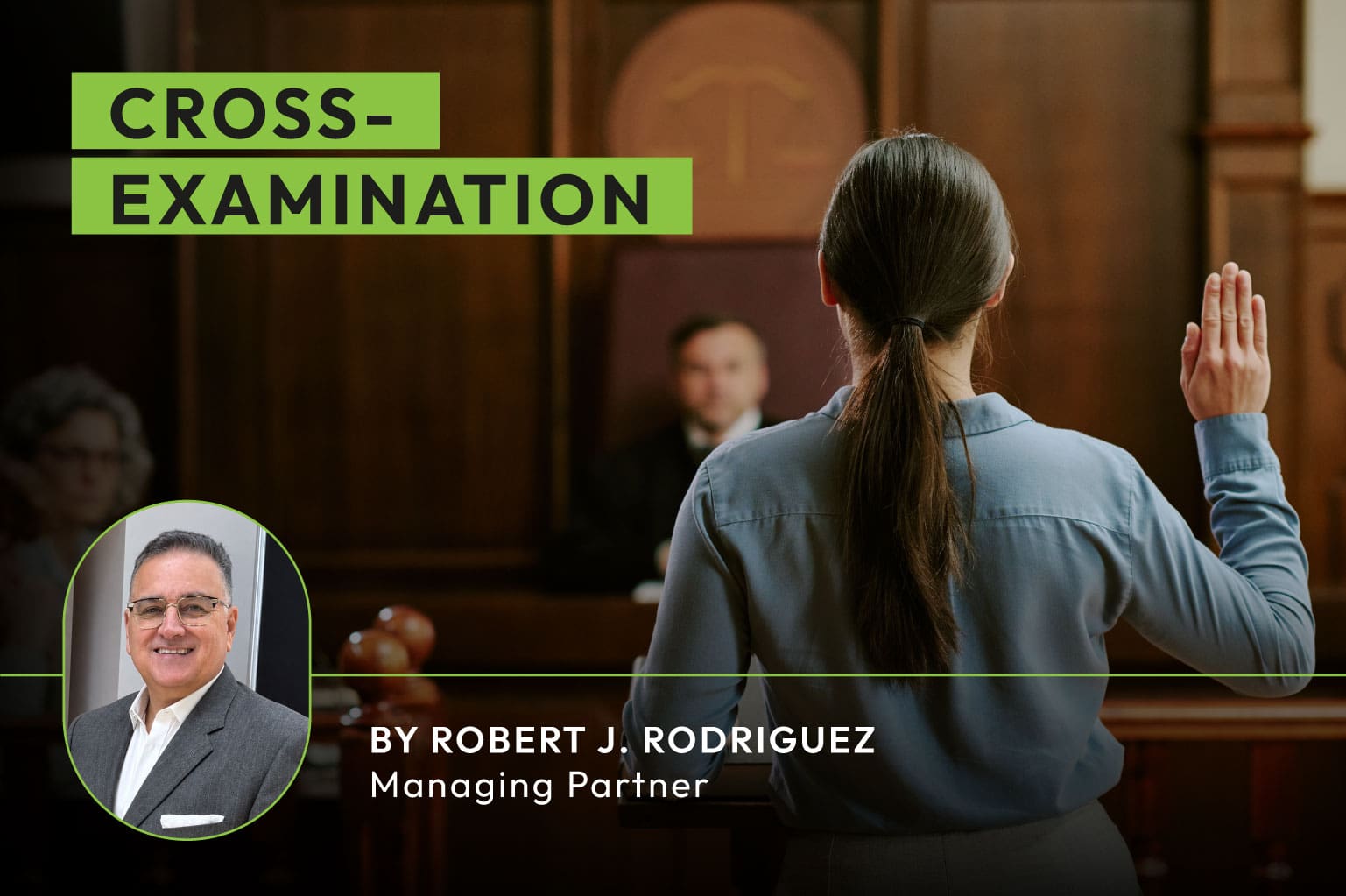
By Robert J. Rodriguez, Managing Partner, MKRS Law
Cross-examination is one of the most powerful—and, for many trial attorneys, most enjoyable—tools in the courtroom. Unlike direct examination, where the witness is given room to tell the story, cross-examination puts the attorney in control of the narrative.
The distinction is important. On direct examination, questions open the door for the witness to explain what happened in his or her own words. The attorney guides the testimony but ultimately relies on the witness to tell the story. Cross-examination turns that dynamic around. On cross, you are the storyteller. The attorney controls the pace, determines the progression of facts, and uses carefully constructed leading questions to move the testimony in a deliberate direction. Ideally, the witness’s answers should be simple: “yes,” “no,” or “correct.”
Preparation Is Key.
That level of control does not happen by accident. It begins long before the first question is asked. Effective cross-examination requires the attorney to identify the narrative to be established and then determine which documents, testimony, medical records, transcripts, and other evidence support each critical point. The questions should be grounded in identifiable or established facts, leaving as little room as possible for the witness to evade the question or reshape the narrative. The stronger the preparation, the more effectively the attorney can maintain control of the examination.
Short Questions. Deliberate Answers.
Effective cross-examination does not require complicated questions. In fact, the opposite is often true. Start with short, simple questions. Establish a rhythm in which the witness becomes accustomed to answering “yes” or “no.” Then build each question upon the answers that came before it. Think of the examination as a series of concentric circles—each question moving incrementally toward the ultimate point you want to establish.
Closed-ended, leading questions allow the attorney to maintain control while keeping the witness focused on the specific fact being addressed.
Practice the Story Before You Tell It.
Like any trial skill, effective examination requires practice. Before crafting questions, map out the story. Identify the evidence supporting every major point and determine how each piece fits into the larger narrative. Only then should the individual questions take shape. The objective is not to ask the most questions. It is to ask the right questions, in the right order, for the right purpose. Preparation creates control. Control allows the attorney to tell the story. And when the questions are properly constructed, sometimes a simple “Yes” or “Correct” really is all you need.
Experienced Defense. Strategic Advocacy.
At MKRS Law, preparation and effective advocacy are at the core of our approach to defending Florida employers, insurance carriers, and self-insured entities. From the initial investigation through depositions, mediation, and trial, our attorneys approach each matter with a strategy designed to protect our clients’ interests.
Have a workers’ compensation matter that requires experienced defense counsel? Contact MKRS Law to learn how our team can assist with your defense needs.
