
Employers can significantly reduce workers’ compensation exposure by implementing proactive hiring practices, maintaining strong safety programs, documenting workplace incidents properly, and coordinating Human Resources and workers’ compensation strategies from the very beginning of the employment relationship.
The intersection of Human Resources and Workers’ Compensation has become one of the most important areas of risk management for employers. Decisions made before an employee is hired, during employment, and after a workplace injury can directly affect claim outcomes, litigation exposure, employee relations, and overall business operations.
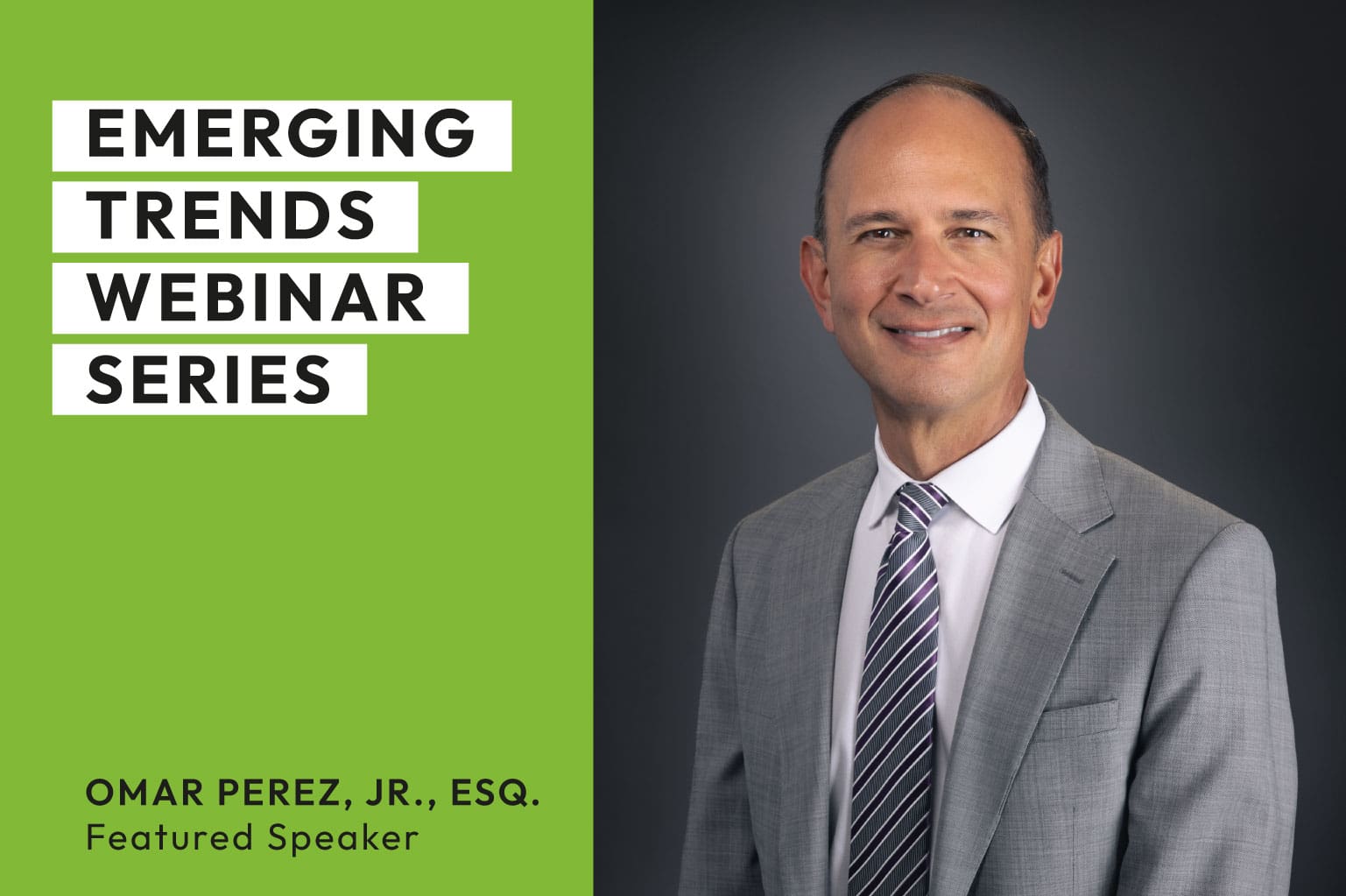
During the recent Emerging Trends Webinar Series, “When HR Meets Workers’ Compensation: Protecting Your Business at the Crossroads,” industry leaders from risk management, human resources, and legal disciplines came together to discuss practical strategies employers can implement to reduce risk and strengthen compliance. The program featured Omar Perez, Jr., Equity Partner at MKRS LAW, alongside professionals from EIG Risk and HRMCS.
Why Human Resources and Workers’ Compensation Are Closely Connected
Workers’ compensation claims rarely exist in isolation. Employment policies, hiring decisions, safety programs, return-to-work initiatives, and employee communications all play a role in claim outcomes.
Organizations that align their HR practices with their workers’ compensation strategy often experience:
- Reduced claim costs
- Improved workplace safety
- Better employee retention
- Stronger claim defenses
- Reduced litigation exposure
- Faster return-to-work outcomes
Understanding this connection is essential for employers seeking to protect both their workforce and their business operations.
The Four Phases of Effective Workers’ Compensation Risk Management
The webinar emphasized that successful workers’ compensation programs begin long before a workplace injury occurs.
Phase 1: Pre-Hire
Employers should establish strong foundations through:
- Drug-Free Workplace programs
- Well-crafted job descriptions
- Integrity and pre-employment screening measures
These preventative tools help employers identify qualified candidates while establishing clear expectations from day one.
Phase 2: Post-Offer
After extending an offer of employment, employers can further strengthen their risk management efforts through:
- Post-offer drug testing
- Post-offer health questionnaires
- New hire safety training
Proper implementation of these measures can provide valuable information regarding an employee’s physical capabilities while promoting workplace safety.
Phase 3: Prevention
Risk management continues throughout employment.
Organizations should focus on:
- Ongoing employee training
- Supervisor leadership development
- Effective return-to-work programs
Companies that prioritize workplace safety and maintain active communication with injured employees often experience improved claim outcomes and lower overall costs.
Phase 4: Post-Claim Management
When workplace injuries occur, employers must be prepared to respond promptly and appropriately.
Critical components include:
- Timely accident reporting
- Thorough incident investigations
- Leadership involvement
- Consistent claims management practices
Early intervention and proper documentation frequently play a significant role in reducing claim exposure and facilitating successful claim resolution.
Legal Issues Every Employer Should Understand
Employment decisions frequently overlap with workers’ compensation claims. Understanding these legal intersections can help employers avoid unnecessary disputes and compliance issues.
Can Employers Terminate Employees Receiving Workers’ Compensation Benefits?
One of the most common misconceptions is that an employee cannot be terminated while receiving workers’ compensation benefits.
While every situation requires careful evaluation, the existence of a workers’ compensation claim does not automatically prohibit legitimate employment actions when supported by documented business reasons.
How Do FMLA and Workers’ Compensation Claims Interact?
Managing obligations under both the Family and Medical Leave Act (FMLA) and workers’ compensation laws requires careful coordination.
Employers must understand when leave protections apply and how they interact with workplace injury claims.
What Are Voluntary Resignation Agreements?
Properly documented voluntary resignation agreements can help reduce future disputes and provide clarity when employment relationships end.
However, these agreements must be structured carefully to avoid unintended legal consequences.
How Do Unemployment Benefits Affect Workers’ Compensation Claims?
Questions regarding unemployment eligibility and about employees who hold multiple jobs continue to pose challenges for employers.
Understanding how these issues affect workers’ compensation exposure is critical when evaluating claims and employment decisions.
Why Is Documentation So Important?
Proper documentation remains one of the strongest defenses available to employers.
Examples include:
- Safety policies
- Training records
- Disciplinary documentation
- Incident reports
These records can significantly impact claim outcomes when issues of misconduct or policy violations arise.
The Importance of Early Legal Guidance
A recurring message throughout the presentation was the value of involving experienced workers’ compensation counsel early in the process.
Proactive legal guidance can help employers:
- Preserve critical evidence
- Ensure compliance with statutory requirements
- Coordinate HR and workers’ compensation strategies
- Reduce litigation exposure
- Strengthen claim defenses
- Improve return-to-work outcomes
For employers, carriers, third-party administrators, and HR professionals, understanding how employment decisions affect workers’ compensation claims is no longer optional—it is an essential component of effective risk management.
Spotlight on Omar Perez, Jr.
With decades of experience defending employers and carriers throughout Florida, Omar Perez, Jr., Equity Partner at MKRS LAW, continues to be a trusted resource for organizations navigating complex workers’ compensation and employment-related challenges.
His practical, business-focused approach helps clients address issues before they become costly disputes while maintaining compliance and protecting operational objectives.
Frequently Asked Questions
Can HR decisions impact workers’ compensation claims?
Yes. Hiring practices, disciplinary actions, return-to-work programs, and documentation can all affect claim outcomes and litigation exposure.
What should employers do immediately after a workplace injury?
Employers should promptly report the incident, conduct a thorough investigation, preserve documentation, and coordinate with their workers’ compensation team.
Can an employee receiving workers’ compensation benefits be terminated?
The existence of a workers’ compensation claim does not automatically prevent legitimate employment actions, but each situation should be carefully evaluated.
Why are return-to-work programs important?
Effective return-to-work programs often improve claim outcomes, reduce costs, and support employee recovery.
When should employers involve legal counsel?
Employers should seek legal guidance as early as possible when managing workplace injuries, employment decisions, compliance concerns, or disputed claims.
Partner with MKRS LAW
At MKRS LAW, we understand that workers’ compensation claims rarely exist in a vacuum. Employment decisions, HR policies, workplace safety initiatives, and claims management strategies are all interconnected.
Our attorneys work closely with employers, carriers, TPAs, risk managers, and HR professionals throughout Florida to develop proactive solutions that reduce exposure and protect business interests.
Whether you need guidance on workplace injury claims, return-to-work programs, employment-related issues, or litigation defense, our team is ready to help.